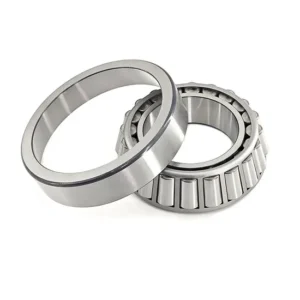
Unified Multi-Brand Sourcing — Consolidate your machine tool spindle maintenance with a single authorized shipment covering all major precision bearing manufacturers without juggling multiple vendors.
Technical Specifications
| Parameter |
Value |
| Designation |
FAG/INA HCB7210-C-T-P4S-UL |
| Bearing Type |
Angular Contact Ball Bearing |
| Bore Diameter (d) |
50 mm |
| Precision Class |
P4 |
| Contact Angle |
15° |
| Number of Rows |
Single |
| Arrangement |
Universal Pairing (UL)* |
| Cage Material |
Phenolic Resin (T)* |
| Rolling Element Material |
Hybrid Ceramic (HCB) |
| Origin |
China |
Note: The T, P4S, and UL suffixes denote specialized precision and pairing variants that require manufacturer catalog confirmation for exact definitions.
Application Suitability
| Industry |
Typical Applications |
| Machine Tool Manufacturing |
High-speed motorized spindles for CNC milling and grinding centers |
| Precision Engineering |
Rotary tables and indexing heads requiring tight runout tolerances |
| Advanced Manufacturing |
High-frequency grinding attachments and precision boring bars |
Why Spindle Vibration Ruins Machined Surfaces Before the FAG/INA HCB7210-C-T-P4S-UL angular contact ball bearing Even Fails
Microscopic runout deviations from mismatched precision suffixes silently destroy surface finishes long before physical fatigue occurs.
I once watched an entire batch of aerospace components get scrapped because a machining center was fitted with a standard P0 grade bearing instead of the required high-precision variant. The resulting chatter marks were invisible to the naked eye but failed ultrasonic inspection. When sourcing critical spindle components, overlooking specialized precision codes or universal pairing arrangements leads to catastrophic thermal binding and severe vibration. Procurement teams often match the base number perfectly but miss the vital suffix combinations, causing premature spindle degradation [NEED_CITE: rolling bearing failure mode classification per ISO 15243].

Matching Hybrid Ceramic Designs to High-Speed Spindle Dynamics
When upgrading spindle assemblies, the FAG/INA HCB7210-C-T-P4S-UL angular contact ball bearing provides the necessary rigidity and thermal stability. Utilizing ceramic rolling elements significantly reduces the overall mass of the rotating assembly. This lower density minimizes centrifugal forces acting on the outer ring raceway during high-RPM operations. Consequently, the reduced friction heat generation allows the spindle to maintain tight dimensional tolerances without suffering from thermal expansion-induced preload spikes, ensuring consistent machining accuracy across extended production runs.
Navigating Thermal and Tribological Challenges in CNC Environments
Spindle environments demand strict control over thermal growth and lubrication integrity. At elevated rotational speeds, standard steel rolling elements generate substantial friction heat, which alters the internal clearance and compromises the 15° contact angle optimization. Furthermore, the phenolic resin cage material is specifically chosen for its ability to operate with minimal lubrication while dampening high-frequency vibrations. If the universal pairing arrangement is not respected during installation, the resulting uneven load distribution will rapidly degrade the raceways [NEED_CITE: bearing thermal displacement and preload loss mechanisms].
Decoding the Suffix Architecture for Precision Applications
The specific suffix string on this designation dictates its survival in a high-speed spindle. The HCB prefix indicates a hybrid design, utilizing ceramic balls to prevent electrical pitting and reduce inertia. The C suffix confirms a 15° contact angle, balancing axial rigidity with high-speed capability. The T suffix typically points to a phenolic resin cage, essential for high-RPM stability. The P4S precision class ensures the tight dimensional and running accuracy required for micron-level machining. Finally, the UL arrangement designates a universal pairing setup with a specific preload, allowing flexible back-to-back or face-to-face mounting configurations without needing matched shims.
The Hidden Financial Drain of Incorrect Spindle Bearing Selection
Selecting a bearing based solely on the base designation while ignoring the precision and pairing suffixes leads to severe operational disruptions. A mismatched preload arrangement causes immediate thermal binding once the spindle reaches operating temperature, resulting in unplanned downtime and catastrophic damage to the spindle shaft and housing. According to ISO 281 frameworks, operating a precision bearing under incorrect internal clearance drastically reduces its calculated fatigue life. This negligence not only voids the equipment warranty but also forces emergency sourcing of replacement shafts and costly machine recalibration [NEED_CITE: economic impact of unplanned spindle downtime in CNC operations].
Why Technical Verification Matters for Our Precision Supply
Our distribution network ensures that every FAG/INA HCB7210-C-T-P4S-UL angular contact ball bearing is backed by complete batch traceability to the manufacturer. We frequently see cross-reference errors where suppliers match the base number but substitute a standard steel cage for the required phenolic resin variant, causing immediate high-speed failure. Our technical team reviews every inquiry to verify that the clearance, cage material, and precision suffixes align perfectly with your spindle’s OEM requirements. We provide official app QR verification for every shipment, eliminating the risk of counterfeit components with cloned codes and soft inner rings that plague the open market.
Documentation & Authenticity
- Certificate of Conformity verifying the specialized P4S precision grade for this specific batch.
- Batch and lot traceability linking the physical bearing to the manufacturer’s original production records.
- QR verification codes scannable via official brand apps to instantly confirm hybrid ceramic authenticity.
- Dimensional and running accuracy inspection reports validating the tight P4S runout tolerances before shipment.
- Material test reports confirming the specific composition of the ceramic rolling elements and steel rings.
Storage, Handling & Mounting Protocols
- Store the bearings in original climate-controlled packaging to prevent moisture ingress that could compromise the P4S precision surfaces.
- Handle the hybrid ceramic components with clean lint-free gloves to avoid transferring corrosive skin oils to the highly polished raceways.
- Maintain the UL universal pairing marks during assembly to ensure the correct preload orientation is achieved in the spindle housing.
- Use induction heating strictly controlled below the thermal limit of the phenolic resin cage when mounting the inner ring onto the spindle shaft.
- Keep the sealed packaging intact until the exact moment of installation to prevent airborne particulate contamination of the 15° contact angle raceways.
Engineering Support for Spindle Rebuilds
To ensure optimal spindle performance, please share your specific radial and axial load profiles, maximum operating speeds, and target temperature ranges. Providing the original OEM equipment number allows our engineering team to perform a comprehensive cross-reference review, verifying that the internal design and preload arrangement match your machine’s exact requirements. We will then provide a detailed technical selection report confirming the suitability of this hybrid ceramic configuration for your specific machining application.
Frequently Asked Questions
Q: How do I verify the authenticity of the P4S precision rating on this bearing?
A: You can verify the specialized P4S precision rating by scanning the QR code located on the packaging using the official manufacturer mobile application. This digital verification links directly to the factory’s batch records, confirming the exact dimensional and running accuracy tolerances. We also supply a physical dimensional inspection report with every shipment to provide secondary validation before the bearing is mounted in your spindle.
Q: Why is it critical to match the UL pairing suffix during cross-referencing?
A: The UL suffix indicates a specific universal pairing arrangement with a predefined factory preload. If a supplier cross-references only the base number and substitutes a different preload class, the spindle will suffer from either excessive play or thermal binding at operating speeds. Matching the exact pairing suffix ensures the bearing set distributes loads evenly, maintaining the rigidity required for high-precision machining operations.
Q: What are the specific mounting requirements for the phenolic resin cage (T suffix)?
A: The phenolic resin cage is optimized for high-speed operation but is sensitive to excessive thermal shock. During installation, if induction heating is used to mount the inner ring, the temperature must be strictly controlled and kept well below the thermal degradation limit of the resin material. Additionally, the cage requires a clean, high-quality spindle oil or appropriate grease to ensure adequate lubrication of the cage pockets during high-RPM rotation.
Q: How does the hybrid ceramic (HCB) design benefit machine tool spindle performance?
A: The hybrid ceramic design utilizes ceramic rolling elements that are noticeably lighter than standard bearing steel. This reduced mass significantly lowers the centrifugal forces generated at high rotational speeds, which in turn minimizes friction heat and reduces the risk of thermal expansion altering the internal clearance. The ceramic material also provides excellent electrical insulation, protecting the spindle from damaging electrical pitting caused by stray currents.

![FAG/INA HCB7210-C-T-P4S-UL Angular Contact Ball Bearing for Machine Tool Spindles [WARN] draft identifier mismatch](https://skfsale.com/wp-content/uploads/2026/10/fag-ina-hcb7210-c-t-p4s-ul-angular-contact-ball-bearing-for-machine-tool-spindles-warn-draft-identifier-mismatch-abce62.avif)